

Social sustainability means building workplaces, services, and communities where people can live with dignity, participate in decisions, and share in progress over time. For leaders and organizations, the practical test is not just whether a policy sounds fair, but whether people experience fair treatment, safety, access, and a real voice. These conditions make human well-being part of how systems operate, not a separate initiative.
Key takeaways
- Judge progress by its effects on people, not by activity counts alone.
- Look for unequal outcomes across groups, places, and levels of decision-making.
- Involve affected people before choices are locked in, and show how their input changed the outcome.
- Measure both benefits and harms, then use what you learn to improve everyday practice.
Social sustainability asks systems to protect dignity and agency
A socially sustainable system supports people’s ability to meet basic needs, feel safe, contribute, and shape decisions that affect them. It includes fair access to opportunities, decent working conditions, inclusion, trust, and the capacity to respond to change without leaving some people behind.
This idea applies beyond charitable programs. A company’s purchasing terms can shape supplier working conditions; a public service’s opening hours can determine who can use it; and a community’s planning process can either include residents or exclude them. The UN Sustainable Development Goals connect social progress with areas such as health, gender equality, decent work, reduced inequalities, and inclusive institutions.
The central question is therefore: who experiences the consequences of this decision, and do they have a meaningful way to influence it? That question shifts attention from good intentions to lived outcomes.
Good intentions are not enough when systems produce harm
A program can have a generous mission and still create avoidable burdens. For example, a service may be available in theory but difficult to reach for people with disabilities, caregivers, shift workers, or residents without reliable transportation. A workplace may promote well-being while schedules remain unpredictable and workers have little say over them.
These gaps often come from routine rules, incentives, or feedback loops rather than one deliberately harmful choice. Map how a decision moves through the system, identify who carries its costs, and ask what would make it easier to raise a concern safely. A structured human impact assessment can help teams surface these effects before they become entrenched.
Good analysis also distinguishes an output from an outcome. Holding a listening session is an output; changing a policy after participants identify a barrier is evidence that their input mattered.
People thrive when fairness, access, and decent work are built in
Lasting well-being depends on practical conditions, not slogans. Organizations can review policies and services against a small set of human needs:
- Fairness: Are pay, opportunities, services, and burdens distributed transparently?
- Access: Can people with different abilities, languages, schedules, and resources take part?
- Safety and dignity: Can people work, learn, and use services without preventable harm or humiliation?
- Voice: Can affected people influence decisions and raise concerns without retaliation?
- Continuity: Can the system support well-being over time, including through disruption?
Decent work is one essential part of this picture. The International Labour Organization’s decent work framework connects productive employment with rights at work, social protection, and dialogue. In practice, that means examining how workloads, contracts, safety, pay, and worker participation fit together, rather than treating well-being as an individual responsibility alone.
Decisions become more legitimate when affected people help shape them
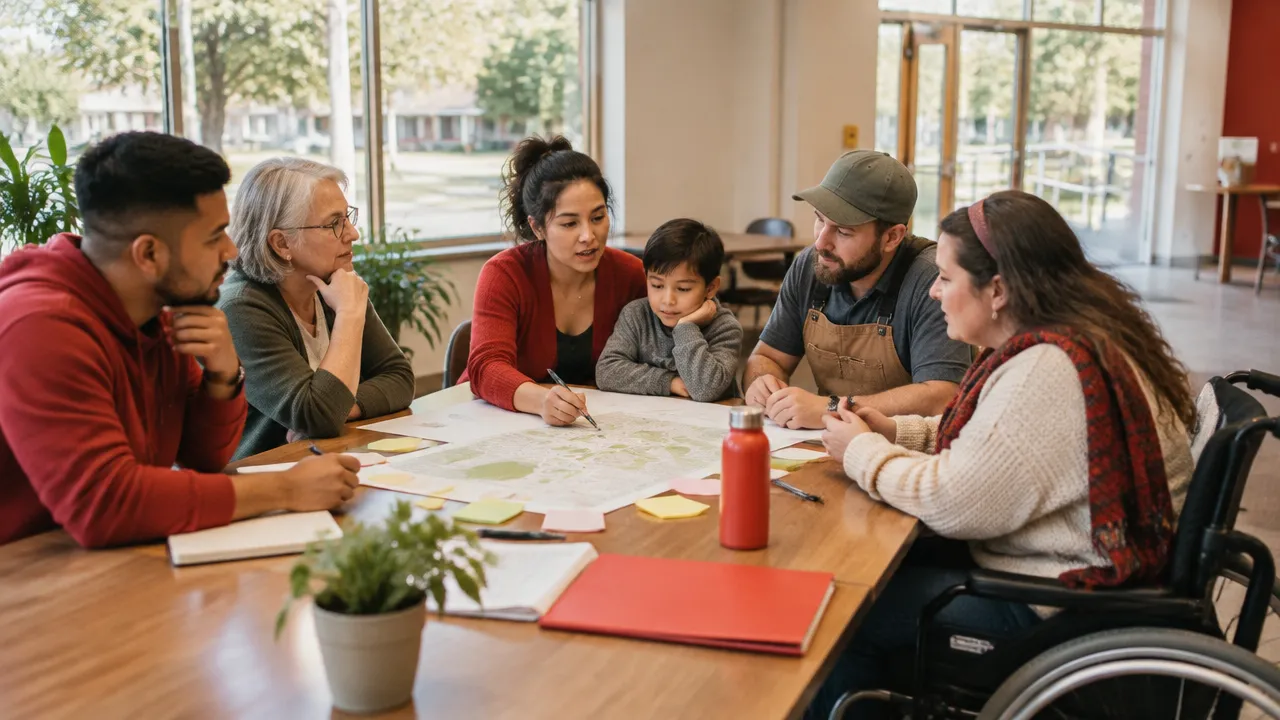
Participation improves a system when it begins early, reaches people most affected, and has a clear path into decisions. Asking for feedback after a plan is final may build frustration rather than trust. State what is open to change, what constraints exist, who will decide, and when people will hear what happened to their input.
For a neighborhood redesign, for example, organizers might offer accessible meeting times, translated materials, and several ways to contribute. They can then publish which concerns changed the design and explain where a request could not be met. Inclusive participation is not simply inviting diverse people into a room; it also requires sharing influence. A clear collective decision-making process can help teams make that influence visible.
Measure whether people’s lived conditions are improving
Useful measurement combines indicators with direct accounts from people affected. Track a limited set of relevant outcomes, such as access, safety, retention, service reliability, or reported ability to raise concerns. Disaggregate results where appropriate so an overall improvement does not hide a worse experience for a particular group.
Pair each measure with a decision it can inform. If staff report low confidence in raising safety concerns, identify who owns the response, what changes are possible, and when progress will be reviewed. Protect confidentiality, explain how information will be used, and avoid collecting sensitive details without a clear purpose.
Numbers can reveal patterns, but they do not explain every cause. Conversations, complaints, observation, and community knowledge help interpret the evidence. A broader human-impact measurement approach keeps financial or productivity results from standing in for people’s actual experience.
Start with one decision, then change the routine behind it
Organizations do not need a perfect framework before they begin. Choose a decision with clear human consequences, such as a scheduling rule, procurement practice, service change, or local investment. Then use a repeatable cycle:
- Identify the people affected, including those who are easy to overlook.
- Ask what they need, what risks they see, and how they want to participate.
- Make responsibilities and trade-offs explicit before deciding.
- Track outcomes, invite feedback, and adjust the process when evidence shows harm.
The aim is not to promise that every decision benefits everyone equally. It is to notice who bears the cost, reduce preventable harm, explain trade-offs honestly, and build accountability into the next decision. This is how values become operational rather than decorative.
Social and environmental progress should strengthen each other
Environmental changes affect health, housing, livelihoods, and access to essential resources, so social consequences must be part of the plan. A transition can reduce pollution yet still deepen hardship if costs, job losses, or displacement fall disproportionately on people with less influence.
Plan for both ecological outcomes and human impacts: involve affected communities, consider who benefits and who bears the burden, and provide fair ways to manage disruption. When people can help shape the transition, environmental action is more likely to support durable well-being rather than shifting harm from one group to another.
Frequently asked questions
What is social sustainability?
Social sustainability means organizing policies, workplaces, services, and community decisions so people can live with dignity, participate meaningfully, and access the conditions they need to thrive. It considers both immediate effects, such as safe work, and long-term effects, such as trust, resilience, and opportunities for future generations.
How can an organization measure social sustainability?
Organizations can assess progress by tracking outcomes such as safety, access to services, fair treatment, worker stability, and whether people feel heard. Disaggregate results to identify who benefits or faces barriers, combine numbers with interviews, and share findings with affected people so measurement leads to changes in decisions and practice.
What are practical ways to improve social sustainability?
Start by identifying who is affected by a decision, then involve those people early enough to influence it. Set clear responsibilities, address barriers to access, monitor both benefits and harms, and give people a safe way to raise concerns. Use the feedback to adjust policies, budgets, and everyday procedures.
How does social sustainability connect to environmental sustainability?
Social and environmental sustainability are connected because environmental decisions affect health, livelihoods, housing, and access to essential resources. A transition can reduce pollution while still harming people if costs, job losses, or displacement fall unfairly on particular groups. Consider who benefits, who bears the burden, and how affected communities can shape the response.