Sustainable development improves life now without passing hidden costs to people, ecosystems, or future generations. For communities and organizations, the practical test is not simply whether a project grows the economy, but whether it creates durable benefits while limiting harm and sharing those benefits fairly.
Key takeaways
- Lasting progress connects human well-being, environmental health, and economic resilience.
- Growth is not sustainable when its benefits rely on unsafe work, depleted resources, or costs shifted to others.
- Measure outcomes over time, including who benefits and who bears the burden.
- Global goals can guide action, but local accountability turns broad ambitions into better decisions.
Development lasts when it improves lives without shifting harm
Sustainable development means meeting present needs while protecting the conditions that allow future generations to meet theirs. In practice, that means considering the quality and distribution of progress, not just its scale. A project can increase income or output and still weaken health, livelihoods, or the natural systems people depend on.
This makes human impact a central measure of value. Ask whether a decision improves people’s safety, opportunity, and agency, and whether its benefits reach those most affected. Leaders can connect financial decisions to more responsible economic choices rather than treating social and environmental consequences as afterthoughts.
How can people, planet, and prosperity stay in balance?
Balance comes from designing for the connections between social well-being, environmental health, and economic viability. These dimensions reinforce one another, but they can also compete. A development plan should make those trade-offs visible instead of assuming that gains in one area automatically compensate for losses in another.
| Dimension | Question to ask | Useful signs of progress |
|---|---|---|
| People | Who benefits, and who may be burdened? | Health, safety, access, fair work, and participation |
| Planet | Does the project respect ecological limits? | Lower pollution, careful resource use, and protected habitats |
| Prosperity | Can benefits endure without creating avoidable harm? | Stable livelihoods, responsible investment, and resilience |
These questions prevent a narrow definition of success. A community may gain jobs from a new facility, for example, yet still face unacceptable pollution or displacement. The right response is to examine alternatives, reduce harm, and involve affected residents before commitments become difficult to change.
What does sustainable development look like in practice?
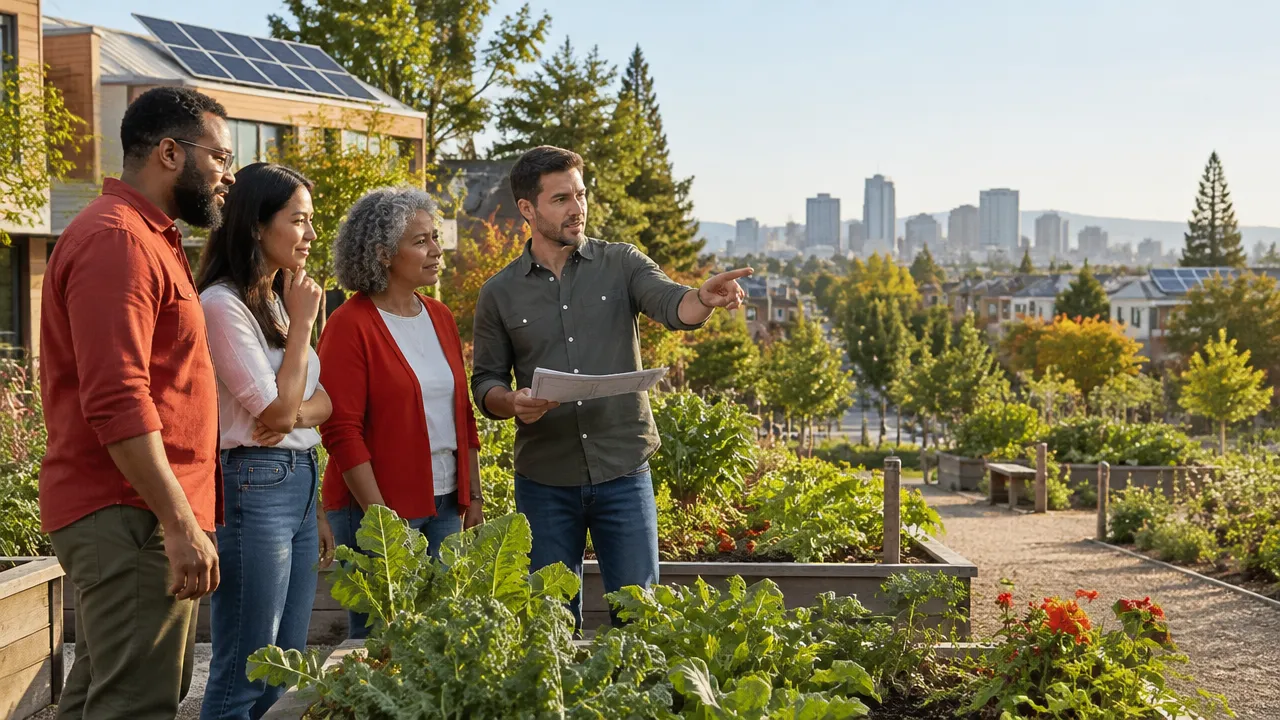
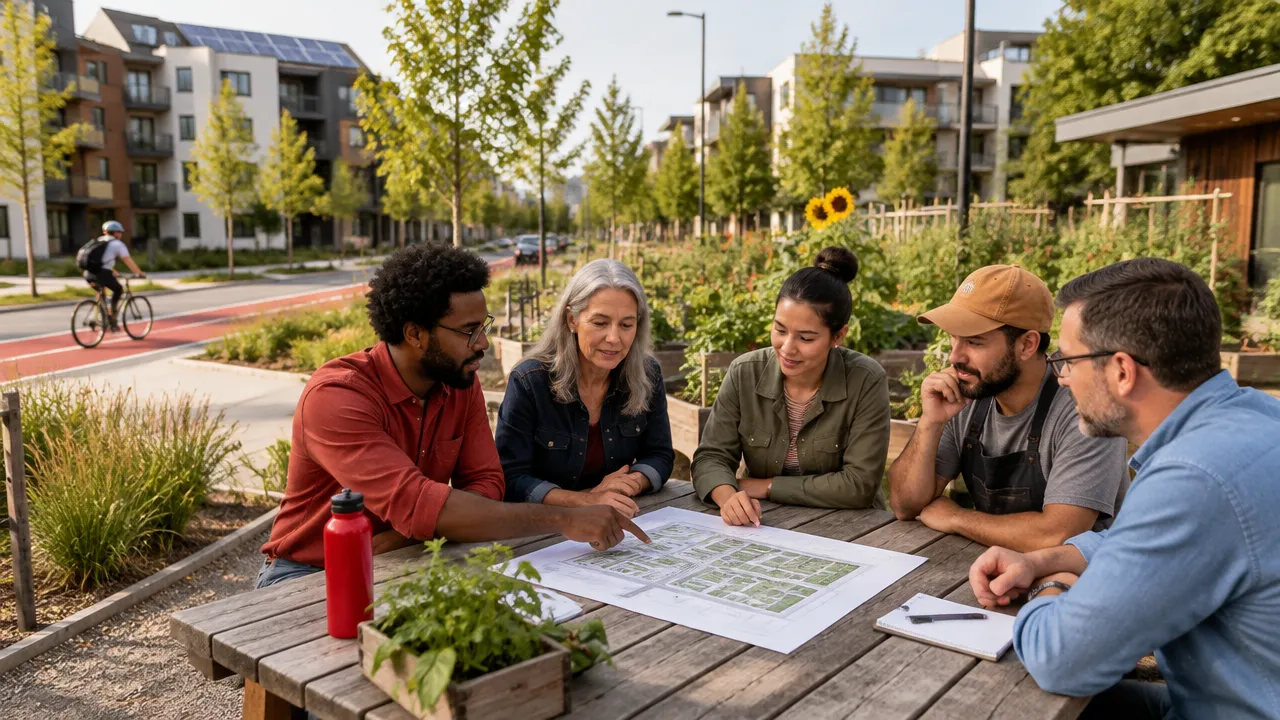
It looks like solving connected problems together. Consider an illustrative neighborhood retrofit: residents, local businesses, and planners improve building efficiency, add shade and safe walking routes, and prioritize affordable housing. The project is stronger when local workers can access the jobs and residents help shape the plans.
Responsible purchasing can extend those benefits beyond the project site. Choosing suppliers with sound labor practices and lower-waste methods supports procurement with community impact. A project team should also set clear safeguards, such as keeping essential services accessible during construction and responding to residents’ concerns.
How can teams tell whether a project is truly sustainable?
A credible assessment tracks outcomes, trade-offs, and distribution over time. Before a project begins, record a baseline and identify the people and ecosystems likely to be affected. Then agree on who will review results, how often they will be reported, and what action follows if harm appears.
- Set a baseline: Document existing conditions, not just intended improvements.
- Track several outcomes: Include environmental effects, access, health or safety, and financial durability.
- Disaggregate results: Check whether gains and burdens differ by neighborhood or group.
- Invite feedback: Give affected people a meaningful way to report problems and influence decisions.
- Adjust course: Change the plan when evidence shows that benefits are uneven or harm is growing.
Indicators become more useful when they support honest decisions rather than a polished scorecard. A thoughtful human impact assessment can help teams identify consequences early, while a broader view of impact beyond profit keeps financial results in context.
What do the Sustainable Development Goals reveal about progress?
The 17 Sustainable Development Goals offer a shared framework spanning poverty, health, education, decent work, climate, and other connected priorities. They can help organizations see how a local decision fits into wider challenges, but using the framework is not the same as achieving meaningful outcomes.
The latest UN progress assessment available in 2026 reports that, among 139 goals’ targets assessed with trend data, 36% are on track or making moderate progress, 49% are progressing too slowly, and 15% have regressed below their 2015 baseline. The 2026 UN assessment of SDG progress shows why ambition needs follow-through: clear responsibility, adequate resources, and evidence that people’s lives and the environment are improving.
Use global goals as a compass, then define local priorities with the people affected. The strongest measure of progress is not only what has been built or earned, but what has been preserved, improved, and made more equitable.
Frequently asked questions
What is meant by sustainable development?
Sustainable development means improving people’s lives today while protecting the environmental and social conditions that future generations will need. It considers who benefits, who bears the costs, and whether progress can last. Economic activity matters, but it is not a sufficient measure of success on its own.
What are examples of sustainable development?
Examples include retrofitting homes to use less energy while keeping them affordable, designing public transit that connects residents to jobs, and buying from suppliers that protect workers and reduce waste. Each example combines practical benefits for people with lower environmental pressure and a plan to maintain results over time.
What are four types of sustainable development?
There is no single universal list of four types. A useful way to group the work is environmental, social, economic, and cultural or institutional development. These categories are connected: for example, cleaner transport depends on infrastructure, fair access, reliable funding, and public decisions that include affected residents.
What are the three main pillars of sustainability?
The three commonly used pillars are social well-being, environmental protection, and economic viability. They are not separate boxes to optimize in isolation. A durable project considers how each affects the others, including whether economic gains depend on unsafe work, resource depletion, or costs shifted onto future generations.
What are five principles of sustainable development?
A practical set of five principles is intergenerational fairness, social equity, respect for ecological limits, meaningful participation, and accountability for outcomes. This is a guiding framework, not a single official list used everywhere. Together, the principles help decision-makers assess both immediate benefits and longer-term consequences.
How can an organization measure whether development is sustainable?
Start with a baseline, then track environmental effects, access to benefits, quality of work, and financial durability. Disaggregate results to see who gains or loses, and review them over time. Pair numerical indicators with feedback from affected people so that a positive average does not conceal serious local harm.