
Most leaders do not wake up planning to be unfair. We know that. Yet bias often appears in quiet, repeated choices that shape who gets heard, trusted, stretched, or left behind. That is why unconscious bias in leaders is so hard to spot. It rarely looks dramatic. It looks normal.
Unconscious bias is often visible not in what leaders say they value, but in the patterns of how they treat people.
In our experience, teams usually feel these patterns before leaders can name them. A manager says they support everyone equally, but the same few people get the best projects. A director praises open discussion, but some voices are interrupted again and again. Small moments gather weight. Over time, they shape culture.
We think it helps to watch for subtle behaviors, not just open acts of exclusion. Below are five signs that bias may be active in leadership, even when intent seems good.
They trust confidence more than competence
Some leaders respond faster to people who sound sure of themselves. They may give more credit to the person who speaks first, talks longer, or presents ideas with bold language. The problem is simple. Confidence and skill are not the same thing.
We have seen meetings where one person speaks with calm detail, while another speaks with force and speed. Too often, the louder presence is read as more capable. This can distort promotions, visibility, and influence.
A study discussed by the Wisconsin School of Business described a hospital setting in Turkey where male supervisors with fewer qualifications were rated more highly than female supervisors with stronger credentials. That kind of gap shows how bias can shape perception, even when the facts point elsewhere.
Presence can impress. Proof should decide.
When leaders favor confidence over evidence, they may:
- Assume outspoken people are more prepared
- Rate polished speech above consistent results
- Confuse certainty with leadership potential
A better habit is to pause and ask, “What supports this judgment?” That question can slow down a biased response before it becomes a pattern.
They interrupt some people more than others
Interruption is easy to excuse. Fast meeting. Tight agenda. Strong opinions. Still, repeated interruption often reveals whose ideas are treated as worthy of space.
We have all seen this happen. Someone starts to explain a point, gets cut off, tries again, then gives up. A few minutes later, another person repeats the same idea and receives praise. The room moves on, but the message is clear.
Who gets interrupted, ignored, or rephrased tells us a lot about power and bias inside a team.
This behavior is subtle because it can hide inside normal conversation. Leaders may not notice that they challenge one group more harshly, ask another group to “get to the point” faster, or show more patience with familiar voices.
To catch this, we suggest looking at meeting habits such as:
- Who finishes their thoughts without being cut off
- Whose ideas get credited by name
- Who receives follow-up questions instead of quick dismissal
Respect is not abstract. It shows up in minutes, tone, and attention.

They give stretch work to people who feel familiar
Leaders often say they choose people based on trust. That sounds fair, but trust can be shaped by comfort, similarity, and habit. We tend to feel more at ease with people who think, speak, or work like us. In leadership, that comfort can become a gate.
A subtle sign of bias is when growth chances keep going to the same kind of person. The assignments may not be public. They may come through casual chats, last-minute requests, or “I thought of you first” moments. Those moments matter because they build careers.
We think this behavior is common because it feels harmless. A leader may believe they are simply moving fast or choosing the safest option. But if stretch work only goes to the familiar few, others stay underseen.
Watch for signs like these:
- High-visibility projects going to the same circle
- Mentoring offered informally, not fairly
- Readiness judged by personal comfort instead of clear standards
One leader we observed was shocked when team members described her as closed off. She thought she was supportive. Then she reviewed six months of project assignments and saw the pattern herself. Every major chance had gone to people who reminded her of her own early career.
That moment was uncomfortable. It was also honest.
They describe the same behavior differently depending on who does it
Bias often appears in language. We hear one person called “decisive” and another called “aggressive” for the same direct style. One employee is “detail-oriented,” another is “rigid.” One leader is “calm,” another is “detached.”
Words do more than describe. They shape reputation.
When identical behavior earns different labels, bias is already influencing judgment.
This can happen in reviews, succession talks, and daily feedback. It can also affect how mistakes are read. A favored employee is seen as having one bad day. Someone outside the leader’s comfort zone is seen as revealing their true limits.
We suggest leaders review the words they use in feedback. Ask:
- Would we use the same label for someone else doing this?
- Are we describing behavior or reacting to style?
- Is our language linked to evidence?
Fair language creates fairer decisions. It also reduces hidden damage that comes from labels people carry for years.
They seek agreement from some people and proof from others
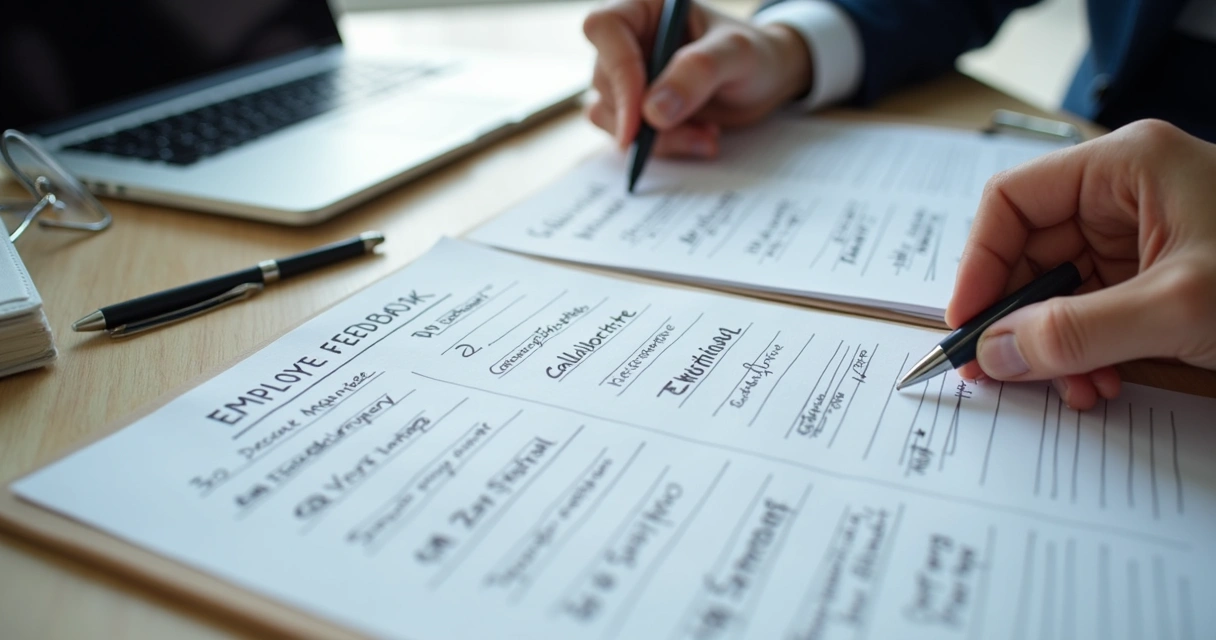
Not everyone is tested in the same way. That is one of the clearest signs of unconscious bias. Some people are trusted early. Others are asked to prove themselves again and again.
We have noticed this in hiring panels, boardrooms, and one-to-one check-ins. A leader may accept one person’s idea with little challenge, while another person is asked for extra data, more background, and stronger defense. Healthy questioning is good. Uneven questioning is not.
This behavior can feel invisible to the leader because each moment seems reasonable on its own. But a pattern of unequal scrutiny creates strain. People start to feel that they are always on trial.
Bias often sounds like “Just be sure” said to the same people every time.
To reduce this, leaders can set the same review standard for all team members. If one proposal needs evidence, all proposals should. If one candidate must meet a bar, that bar should be clear for everyone.
They confuse cultural fit with personal comfort
Many leaders want teams that work well together. That goal is valid. The trouble starts when “fit” means people who feel easy to relate to. Then hiring and promotion drift toward sameness.
We think this is one of the most accepted forms of bias because it sounds positive. No one says, “I prefer people like me.” They say, “I just do not see a fit.” Yet that phrase can hide a lot.
Personal comfort may be shaped by accent, school background, communication style, age, or social behavior. None of those automatically predict character or skill. When leaders use comfort as a shortcut, they narrow the team without admitting it.
A stronger question is not “Do they fit us?” It is “Will they add strength to the team, and can we work with difference maturely?” That shift can change who gets welcomed in.
Conclusion
Unconscious bias in leaders is rarely loud. It shows up in split-second trust, uneven patience, selective support, and language that quietly ranks people. These behaviors can shape careers and team health long before anyone speaks openly about unfairness.
Leadership becomes fairer when we stop judging our intent and start reviewing our patterns.
We believe that self-awareness in leadership is not a public pose. It is a steady practice of noticing where human judgment drifts, then correcting it with humility. That is how leaders protect dignity, widen opportunity, and build trust that feels real.
Frequently asked questions
What is unconscious bias in leaders?
Unconscious bias in leaders is the set of automatic judgments or preferences that shape decisions without full awareness. It can affect hiring, feedback, trust, delegation, and promotion. These biases often come from habit, culture, past experience, or untested assumptions.
How can leaders recognize subtle biases?
Leaders can recognize subtle biases by reviewing patterns instead of single moments. We suggest watching who gets interrupted, who receives stretch assignments, whose mistakes are forgiven, and whose ideas are trusted quickly. Feedback from others and regular self-review also help reveal blind spots.
What are common subtle biased behaviors?
Common subtle biased behaviors include favoring confident speakers over proven performers, interrupting certain people more often, giving better chances to familiar employees, using different labels for the same behavior, and asking some people for more proof than others. These actions may seem small, but repeated over time they shape unequal outcomes.
How to reduce unconscious bias at work?
To reduce unconscious bias at work, leaders can create clear standards for hiring, reviews, and project assignments. It also helps to track speaking time in meetings, document reasons for decisions, ask for mixed viewpoints, and question fast assumptions. Simple structure often makes hidden bias easier to catch.
Why do unconscious biases matter in leadership?
Unconscious biases matter in leadership because leaders influence access, visibility, trust, and growth. When bias goes unchecked, teams lose fairness, morale, and confidence in decision-making. When leaders become more aware, people are more likely to feel respected, seen, and judged by real contribution.