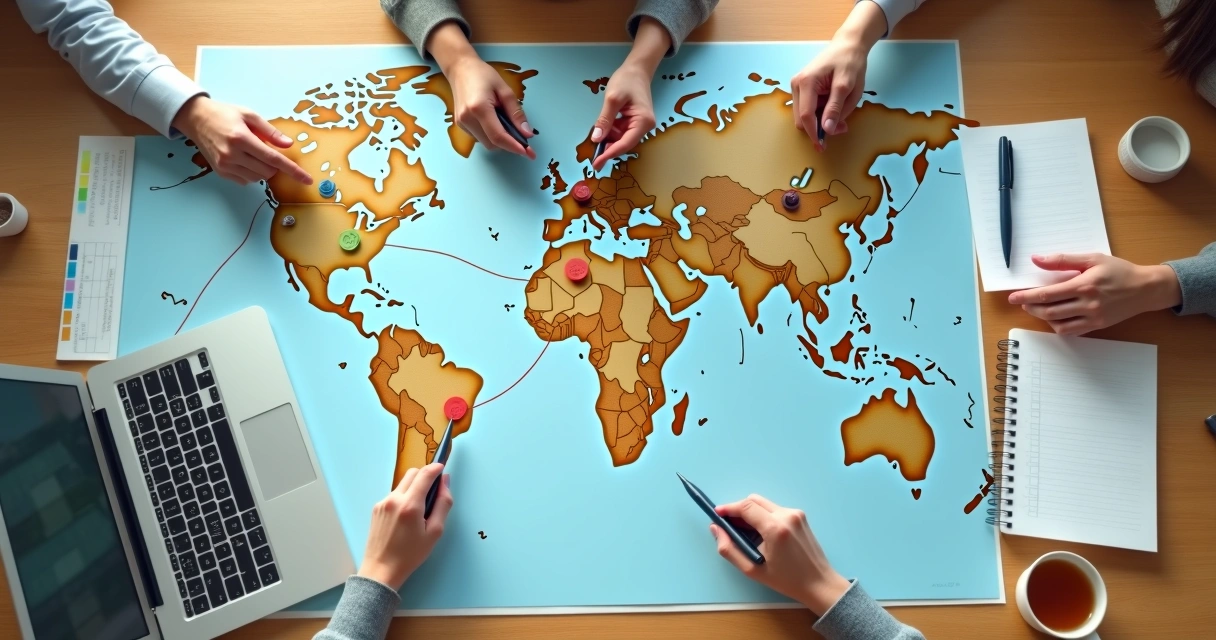
When people work across borders, ethics can get blurry fast. A gift is polite in one place and suspicious in another. Silence in a meeting may mean respect, fear, or disagreement. We have seen small misunderstandings grow into trust problems because no one had a shared way to judge what was right.
Simple ethics frameworks help teams slow down, compare views, and choose actions they can defend with clarity.
This matters because ethical trouble often starts in groups, not in isolation. In research on ethical dilemmas in team settings, 87.5% of dilemmas happened in teams, and collaboration issues appeared in 52.5% of reported cases. We think that lesson travels well beyond research. When several people, cultures, and pressures meet, confusion is not rare. It is expected.
Why cross-border ethics gets hard
Most teams do not struggle because people lack values. They struggle because values are expressed through local habits, laws, power distance, and language. A manager in one country may ask for quick approval. In another, the same speed feels reckless. Someone avoids direct criticism to preserve harmony. Someone else reads that as hiding facts.
We once saw a regional team debate whether to use customer data gathered by a local partner. One office said it was normal business practice. Another said consent was too vague. Nobody was trying to do harm. Still, the room felt tense.
Good people can reach bad decisions when the process is weak.
That is why teams need shared steps, not just shared slogans. A framework gives people language for doubt before doubt becomes damage.
A three-check framework for fast decisions
For day-to-day cases, we like a simple three-check method. It is short enough for meetings and strong enough for real pressure.
Before the list starts, define the decision in one sentence. If the team cannot state the choice clearly, the ethics talk will drift.
Check the rules. Ask what local law, contract terms, internal policy, and sector rules say. This does not solve everything, but it sets boundaries.
Check the impact on people. Ask who may be helped, excluded, misled, exposed, or silenced by this choice. Include clients, local staff, contractors, and communities.
Check public explainability. Ask whether we would feel at ease explaining the decision to peers, leadership, and those affected.
This framework works because it joins compliance, human impact, and accountability. If one check fails, the team pauses. It does not mean the answer is always no. It means the answer is not ready yet.
We suggest writing the three checks into meeting notes. A short written record lowers memory gaps later.

A five-question framework for gray areas
Some issues are less direct. The rules may be silent. The local custom may conflict with a company norm. In these moments, we use five questions that widen the view.
What facts do we know, and what are we assuming?
Who has voice in this decision, and who is missing?
What harms could appear now, and what harms could appear later?
Which option best protects dignity, fairness, and trust?
What would we change if this happened in our own location?
Ethics improves when teams separate facts from assumptions before they debate values.
This part is often overlooked. In cross-border teams, assumptions hide inside accents, titles, and local habits. A team may assume silence means agreement. It may only mean that junior staff do not feel safe speaking. The framework helps surface that.
Regional context also matters. A meta-analysis on ethical climate across 46 countries found that stronger ethical climates were linked with better well-being, satisfaction, commitment, and performance, while lowering dysfunctional behavior. The effects varied by region, which tells us one thing clearly. We should not copy one ethics culture plan and expect the same result everywhere.
How to run an ethics pause in meetings
Frameworks fail if teams only use them after a crisis. We think the better path is a short ethics pause built into regular decisions. It takes a few minutes. It can save months of repair.
A simple ethics pause can follow this order:
Name the decision.
State the local context, including law, custom, and pressure points.
Use one framework, not three at once.
Invite at least one view from another country team.
Record the reason for the final choice.
That fourth step matters. Fresh eyes often catch what local teams stop seeing. Still, the goal is not to let distant people overrule local reality. It is to test blind spots with respect.
We also recommend one meeting role on rotation: ethics challenger. This person is not there to block progress. The role is to ask the awkward question others may avoid.
Clarity is kinder than silent doubt.
What leaders should watch for
Leaders shape ethics less by speeches and more by reaction. If people raise a concern and get punished, the framework becomes theater. If they raise a concern and get heard, the framework becomes culture.
There are a few warning signs we watch closely:
People say, "This is how it is done here," without further review.
Local teams feel judged, not supported, when they explain context.
Senior voices settle the issue before facts are shared.
Records focus on legal safety but ignore human effect.
A healthy cross-border ethics process protects both local knowledge and shared standards.
That balance is not always comfortable. But comfort is not the goal. Sound judgment is.

How to make the frameworks stick
A framework only helps if people can recall it under pressure. Long ethics manuals often stay untouched until trouble arrives. We prefer small tools used often.
Teams can make these frameworks stick in simple ways:
Put the three-check method in meeting templates.
Train managers with short real-life scenarios from different regions.
Review one ethics case each quarter without blame.
Translate key terms so meaning stays clear across languages.
The last point sounds minor. It is not. Words like fairness, consent, conflict, and disclosure may look familiar in English but carry different force in local use. We have seen one translated term shift the whole tone of a policy discussion.
Conclusion
Cross-border teams do not need perfect agreement on every moral question. They need a fair process that makes room for law, people, culture, and accountability. That is how trust grows across distance.
When we use simple frameworks, we reduce panic, hidden assumptions, and rushed choices. We also make it easier for people to speak with honesty before harm spreads. In our view, that is the real gain. Not just fewer conflicts, but better judgment shared by the whole team.
Frequently asked questions
What is a cross-border team?
A cross-border team is a group of people working together from different countries or legal jurisdictions. They may share goals, projects, or clients, but they bring different laws, customs, languages, and work habits into the same decision process.
How to handle ethics issues abroad?
We handle ethics issues abroad by slowing the decision down, checking local rules, assessing human impact, and asking whether the decision can be explained openly. It also helps to include local voices early, since they can point out cultural or legal details that others may miss.
What are simple ethics frameworks?
Simple ethics frameworks are short sets of questions or steps that help teams judge difficult choices. Examples include checking rules, checking impact on people, and checking whether a decision would stand up to public explanation. Their value is that people can use them in real meetings, not only in theory.
Why do ethics differ by country?
Ethics differ by country because social norms, legal systems, religious traditions, history, and power relationships differ. Many values may be shared, such as honesty or fairness, but the way people apply them in business situations can vary a lot from one place to another.
How can teams resolve ethical conflicts?
Teams can resolve ethical conflicts by naming the issue clearly, gathering facts, hearing all affected voices, using one shared framework, and recording the reason for the final choice. It also helps when leaders create safety for disagreement, so people can raise concerns without fear.