
It often starts with a small choice. A deadline is close. A client wants faster results. A manager sees a way to cut costs, but the shortcut may hurt workers, mislead buyers, or hide a real risk. On paper, the move looks smart. In practice, it feels wrong.
When ethics conflict with business goals, the real test is not strategy. It is character under pressure.
We have seen that many business problems are not born from bad planning alone. They grow when people silence their own judgment to protect numbers, status, or speed. That is when a healthy company can begin to drift. Slowly at first. Then all at once.
Ethics in business is not just about obeying the law. Law sets a floor. Ethics asks a harder question: what kind of impact are we creating through our decisions? A company can meet legal rules and still harm trust, dignity, health, or fairness.
Why this conflict happens
Business goals are often clear and measurable. Increase revenue. Cut waste. Gain market share. Launch faster. Ethical concerns are often less immediate, even when they matter more over time. They ask us to stop, reflect, and accept limits.
That is why conflict appears. One side speaks the language of targets. The other speaks the language of consequences.
In our experience, ethical conflict tends to appear in situations like these:
Pressure to hide defects or weak points in a product
Incentives that reward sales without checking how those sales happen
Cost cuts that reduce safety, fairness, or humane working conditions
Data collection practices that ignore clear consent
Leadership cultures where speaking up carries a personal risk
None of these issues appear only in dramatic moments. Many begin in routine meetings. A phrase like “we will fix it later” can become a habit. Habits shape culture. Culture shapes outcomes.
Small compromises teach big lessons.
What companies lose when they choose the wrong side
Some leaders think ethics slows business down. We think the opposite is often true. Unethical choices may create a short lift, but they usually plant long-term damage inside the company itself.
The first loss is trust. Trust from workers, customers, partners, and the public is slow to build and fast to break. Once people feel misled, they stop giving the benefit of the doubt.
The second loss is internal clarity. When people see double standards, they become cynical. They stop believing values are real. They protect themselves. Collaboration weakens. Honest feedback disappears.
An unethical win can still be a business loss if it weakens trust, morale, and credibility.
There is also a hidden human cost. We rarely talk enough about what ethical conflict does to the people inside the system. Many workers know when something is wrong. They feel it in meetings, in approvals, in silence after hard questions. Over time, this creates stress, disengagement, and moral fatigue.

What ethical leadership looks like in hard moments
Ethical leadership is not soft. It is disciplined. It means we are willing to face tension without hiding from it. It also means we do not confuse urgency with permission.
When values and goals clash, strong leaders tend to do a few things well. They pause before deciding. They ask who will carry the burden of the choice. They invite dissent. They accept that some gains should be refused.
A useful response often follows a clear sequence:
Name the conflict in plain language.
Identify who may be affected now and later.
Review both the legal and human risks.
Look for a path that protects dignity as well as results.
Be ready to walk away from a goal if the cost is too high.
This may sound idealistic to some people. It is not. It is practical judgment. In many cases, the hardest part is not finding the right answer. It is having the courage to act on it when pressure rises.
We think leaders reveal their true standards when there is something real to lose. Anyone can praise ethics in calm seasons. The test comes when a target is missed, investors are impatient, or a public promise is at risk.
Can ethics and business goals work together?
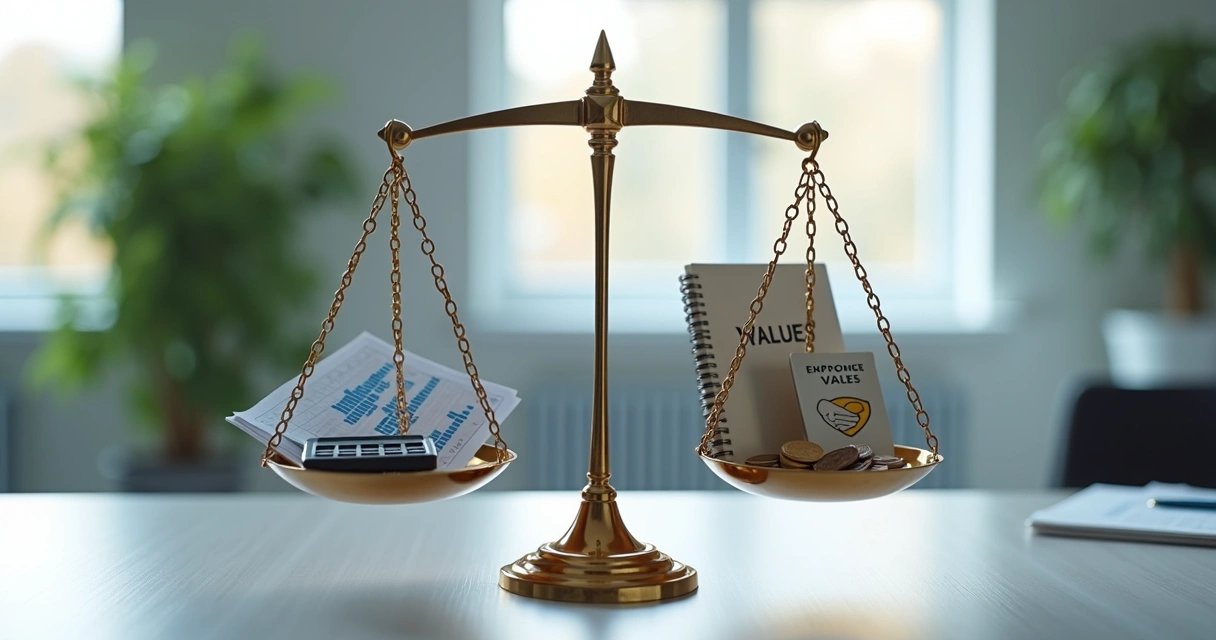
Yes, but not by accident. They work together when goals are built with human impact in mind from the start. If ethics is added only at the end, it becomes a barrier. If it shapes the plan early, it becomes guidance.
Ethics and business goals can support each other when success is defined by both results and consequences.
This requires better questions inside the company. Not only “Will this work?” but also “Who may be harmed?” Not only “Can we do this?” but also “Should we?” Those questions may slow a meeting by ten minutes. They may save a company years of repair.
We also believe incentives matter. If leaders reward outcomes only, people will cut corners. If leaders reward process, honesty, and responsible judgment too, behavior shifts. Culture is shaped by what gets praised, ignored, and punished.
How people should respond when they face this conflict
Not everyone has full power in a business. We know that. Many people face ethical tension from the middle, not from the top. Even then, there are responses that protect integrity.
In our view, people should try to:
Document concerns clearly and factually
Raise questions early, before damage grows
Use internal channels when they are safe and real
Seek advice from trusted mentors or legal support when needed
Refuse direct involvement in actions that violate conscience or duty
There is no easy script for every case. Some people can challenge a bad decision openly. Others face real fear about income, status, or retaliation. We should be honest about that. Ethical courage is admirable, but systems should not depend on individual bravery alone. Companies must build structures where truth can be spoken without punishment.
Conclusion
When ethics conflict with business goals, something deeper than a business model is exposed. We see what the company truly serves. If it serves numbers at any cost, the damage may not show at once, but it will show. In trust. In culture. In people.
If, however, a company treats human impact as part of value, then hard decisions become clearer. Not easy. Clearer. Some profits will be refused. Some growth will slow. Some plans will change. Yet what is built on honesty, respect, and responsibility stands on firmer ground.
How we win matters.
We believe the best business goals are not those that ask people to betray their conscience. They are the ones that call people to act with skill and integrity at the same time. That is not weakness. It is maturity in action.
Frequently asked questions
What is an ethical conflict in business?
An ethical conflict in business happens when a company or employee must choose between a business aim and a moral duty. This may involve pressure to mislead, hide harm, treat people unfairly, or ignore long-term damage for short-term gain.
How to balance ethics and profits?
We balance ethics and profits by setting goals that include human consequences, not just financial results. Clear values, fair incentives, honest reporting, and room for dissent help companies make money without causing avoidable harm.
Can businesses ignore ethics for growth?
Yes, they can for a time, but the cost tends to return later through distrust, legal trouble, poor culture, public backlash, or internal burnout. Growth without ethics is unstable because it weakens the relationships that support lasting success.
What are examples of ethical conflicts?
Examples include selling a product with known defects, pushing staff to make misleading promises, collecting personal data without clear consent, reducing costs by lowering safety standards, or hiding facts from customers or investors.
Is it worth it to prioritize ethics?
Yes. We think it is worth it because ethics protects trust, supports healthier cultures, and helps companies build results they do not need to hide. It may require harder choices now, but it creates stronger credibility over time.