We often treat work as a place for plans, targets, and tasks. Yet anyone who has spent time inside a team knows that work is also shaped by mood, trust, silence, fear, and hope. These forces are not always visible, but they guide how people listen, speak, decide, and care for one another.
Art helps people notice what is present in a group before those patterns harden into conflict or disconnection.
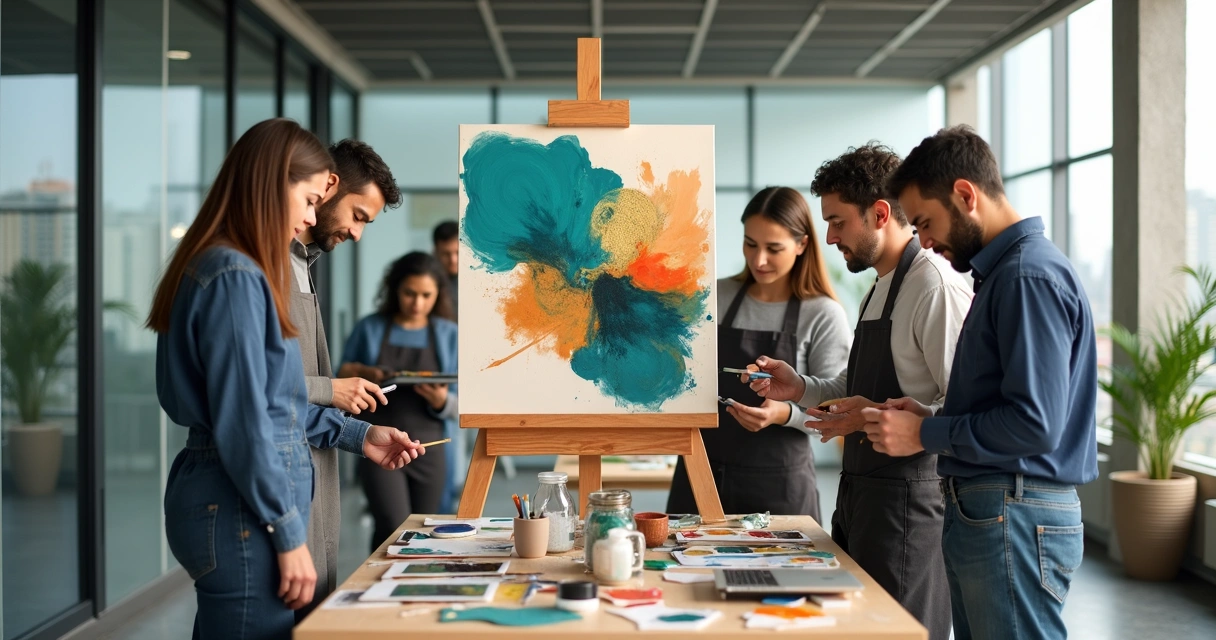
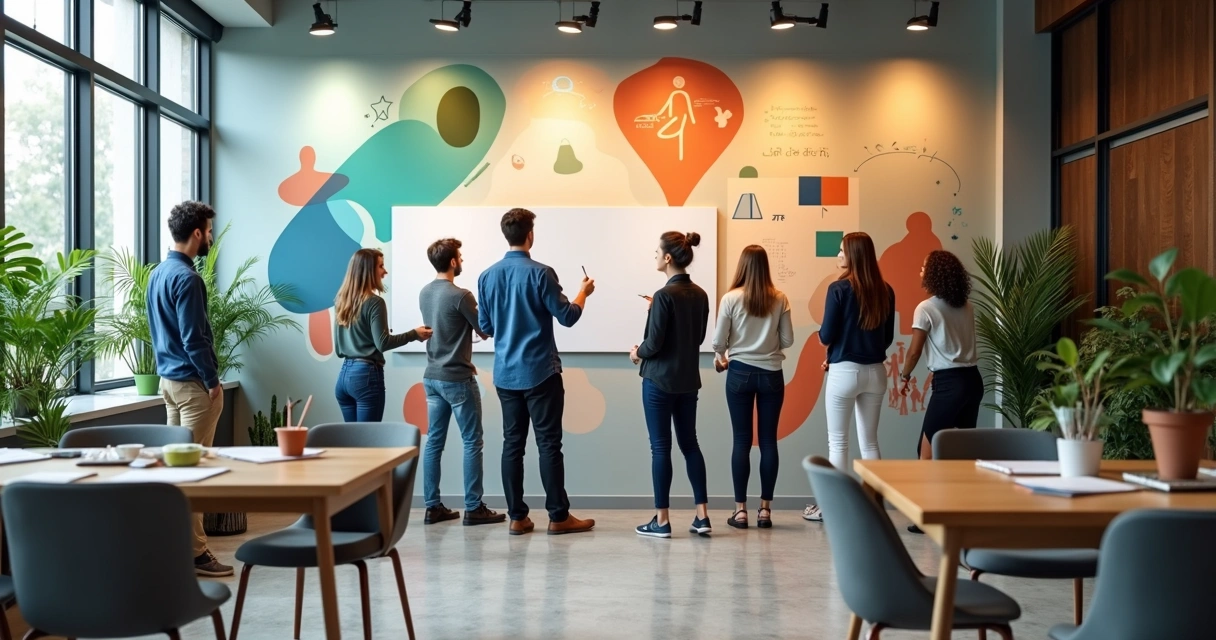
When we bring art into the workplace, we are not adding decoration to a serious space. We are opening a different kind of attention. A mural can change how people feel in a hallway. A music session can soften defensive habits. A shared act of drawing can reveal how differently people see the same issue.
We have seen this in simple moments. A team that could not talk honestly about tension was asked to respond to one image with a few words. The answers were quiet at first. Then came surprise. One person saw pressure. Another saw loneliness. Another saw a chance to begin again. The meeting changed because people changed the way they were seeing each other.
Art makes the invisible visible.
What collective awareness looks like at work
Collective awareness is the shared ability to sense what is happening among us while we work. It includes the emotional tone of a team, the values behind choices, the unspoken rules in meetings, and the effect of leadership behavior on others.
Collective awareness grows when people can reflect together, not just act together.
Without that shared reflection, teams may keep moving while becoming less human in the process. People stop naming strain. They hide doubt. They perform agreement. The group may still function on the surface, but inside, attention has narrowed.
Art interrupts that pattern. It slows reaction. It invites observation. It creates enough distance for people to speak with less fear and more honesty.
Why art works when direct talk fails
Not every truth enters through argument. Sometimes a chart cannot express what a photograph can. Sometimes a poem gives language to feelings that a formal update keeps buried. This is why art has such power in group settings. It reaches both thought and feeling at once.
In our view, art supports workplace awareness in at least three ways:
It helps people name emotions without shame.
It creates shared meaning across different roles and backgrounds.
It lowers rigid communication patterns and opens fresh dialogue.
That shift matters because many workplace struggles are not caused by lack of skill. They come from blocked perception. People do not see the impact of their tone, timing, or assumptions. Art can gently expose those gaps.
A song played before a hard conversation can settle the room. A collective collage can show where a team feels fragmented. A story circle can reveal who feels heard and who does not. These are not side activities. They are forms of social insight.
What research shows about art and workplace wellbeing
We do not need to rely only on intuition here. Evidence also points in the same direction. A twelve-week creative-arts therapy program for healthcare workers found lasting gains after 12 months. Anxiety fell by about 40.6%, depression by 29.0%, emotional exhaustion by 15.0%, depersonalization by 14.3%, and turnover intention was 6.1% lower than in the control group.
Those numbers matter because awareness is hard to sustain when people are depleted. Art does not replace fair structures or good leadership, but it can support recovery, expression, and emotional processing in a way that standard workplace tools often do not.
Research on space also gives us a useful lesson. A mixed-methods workplace study on windows, natural materials, and representational artwork found that natural materials and windows reduced stress, while diverse identity artwork increased creativity and belonging. Even biobehavioral signs matched what people reported.
The art people see around them can shape how safe, included, and mentally open they feel.
Leadership development shows a similar pattern. A nine-month arts-based leadership training study found that, after 18 months, teams had better mental health, more constructive coping, and less performance-based self-esteem than teams in conventional training.
This is striking. It suggests that art is not only for expression. It can also reshape how leaders relate to pressure, identity, and other people.
Forms of art that activate awareness
Art at work does not need to be grand, expensive, or rare. It needs to be intentional. We have found that the best forms are those that invite presence rather than performance.
Here are a few approaches that often help:
Visual art in shared spaces that reflects human diversity, local meaning, or team values.
Guided drawing or collage sessions after periods of stress or change.
Storytelling circles where people respond to images, music, or short written prompts.
Poetry or reflective writing used in leadership retreats and team resets.
Music, movement, or rhythm exercises that help groups settle and listen.
Each form opens awareness in a different way. Visual art tends to affect atmosphere and belonging. Writing often brings private insight to the surface. Group making activities reveal patterns of control, patience, silence, and cooperation.
Shared creation changes shared perception.
How to bring art into work with care
Art can deepen awareness, but only if it is introduced with respect. If leaders force participation or turn every exercise into a metric, people pull back. The goal is not to impress anyone. The goal is to help people sense more clearly what is happening within and between them.
We suggest a simple sequence:
Start with one real need, such as tension, fatigue, weak belonging, or poor listening.
Choose one art form that fits the culture and the moment.
Create psychological safety before asking people to share.
Invite reflection after the activity, with gentle questions.
Connect the insight to daily behavior, meeting habits, or leadership practice.
This structure keeps the experience grounded. It also helps teams avoid a common mistake, which is treating art as entertainment rather than a doorway to awareness.

Conclusion
When we think about healthier workplaces, we should not limit ourselves to systems and procedures alone. People need spaces where meaning can be felt, not just discussed. Art offers that space. It helps teams slow down, see each other more fully, and notice how their choices affect the whole group.
At work, art can awaken collective awareness by turning emotion, memory, and perception into shared insight.
That is why art belongs in serious workplaces. Not as ornament. Not as escape. But as a practice of human attention that can shape how we lead, relate, and build together.
Frequently asked questions
What is collective awareness at work?
Collective awareness at work is a team’s shared ability to notice emotions, behavior patterns, group dynamics, and the human effects of decisions. It helps people see not only what they are doing, but also how they are doing it together.
How can art increase team awareness?
Art increases team awareness by helping people express feelings, reflect on group experiences, and notice what is often left unsaid. Images, music, writing, and shared creative activities can open safer and deeper conversations.
Is art useful for workplace engagement?
Yes. Art can strengthen workplace engagement by improving belonging, emotional expression, and shared meaning. When people feel seen and included, they are more likely to participate with care and attention.
What are examples of art at work?
Examples include murals in shared spaces, guided drawing sessions, reflective writing workshops, music-based team openings, storytelling circles, collage activities, and artwork that reflects diverse identities and values.
How to start art initiatives at work?
We suggest starting small. Identify one team need, choose one simple format, create a safe space for participation, and invite reflection after the activity. A focused and respectful start often leads to stronger trust and better results.